








































Most States Ban Pet Monkeys. A Handful Make It Surprisingly Easy.
There is no federal law that bans Americans from owning a monkey. The Captive Primate Safety Act, which would prohibit private possession and interstate commerce of pet primates, has been introduced in Congress multiple times but has never passed. That means legality depends entirely on the state you live in, and the answers vary wildly.
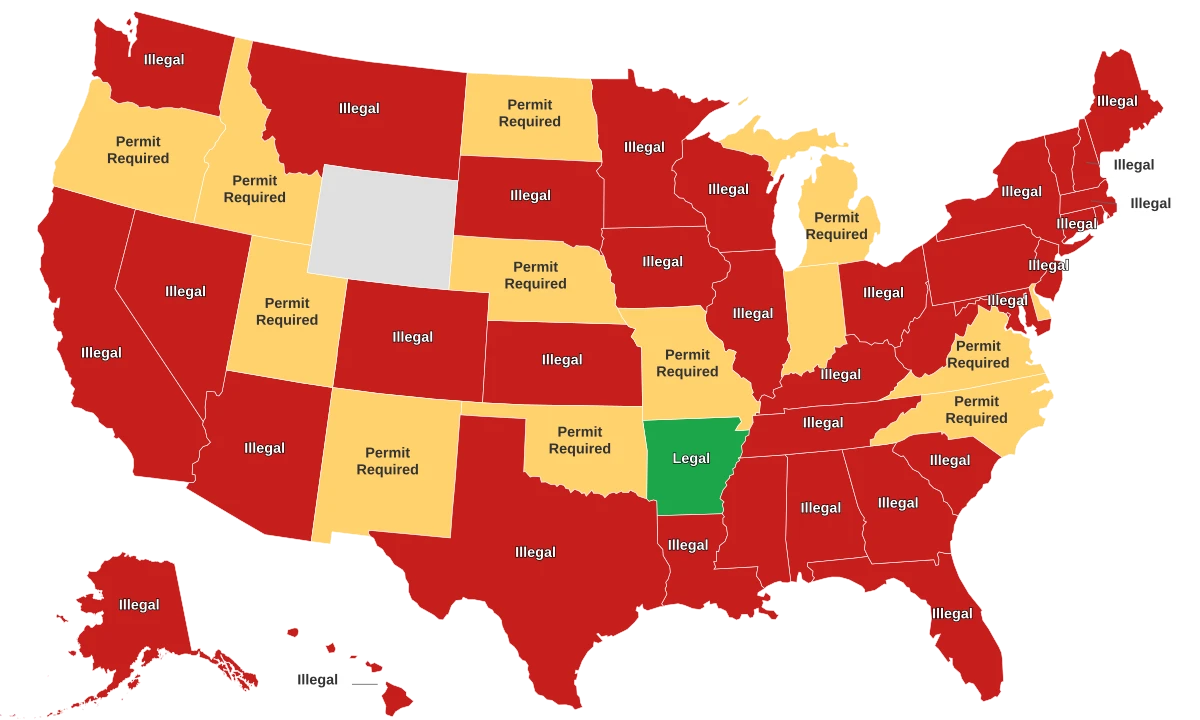
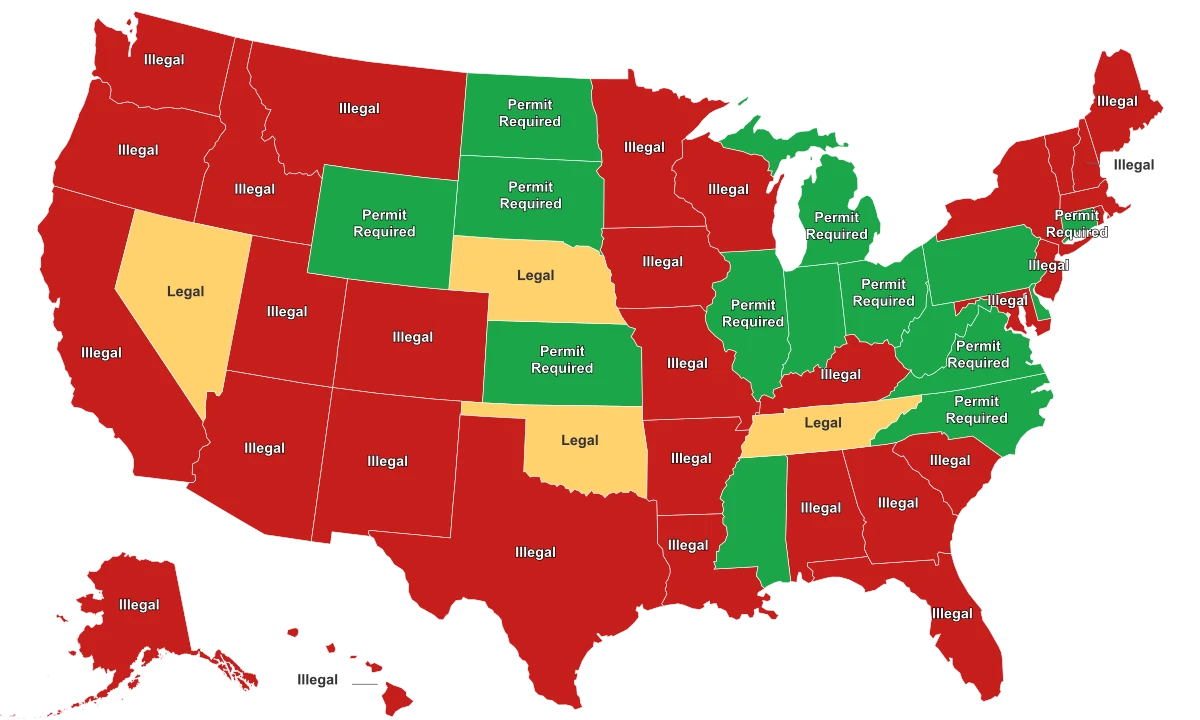
Only 4 states allow private monkey ownership with no permit or license: Oklahoma, Nebraska, Nevada, and Tennessee. Another 14 states allow ownership with a permit. The remaining 32 states and Washington, D.C. ban it outright. The majority of the country treats primate ownership the same way it treats owning a tiger or a wolf: as a public safety risk that the average person is not equipped to manage.
The federal government did take one step. In 2003, the CDC banned the importation of nonhuman primates into the United States for the pet trade under 42 CFR Part 71.53. That means every legally sold pet monkey in the country must be captive-bred domestically, and the breeding is concentrated in the small number of states where it is legal. The supply bottleneck is one reason prices are high: a capuchin monkey typically costs $5,000 to $7,000, and even a small marmoset runs $1,500 to $4,000.
Local laws add another layer. Even in the four states with no state-level restrictions, individual cities, counties, and homeowners associations can ban exotic pets on their own. A monkey that is legal under state law may still be illegal on your block.
The Disease Risk That Drives Most State Bans
The single biggest reason most states ban pet monkeys is not behavior. It is disease. Nonhuman primates can carry more than 200 known zoonotic pathogens, diseases that can jump from animals to humans. The most dangerous is Herpes B virus, formally known as Cercopithecine herpesvirus 1.
Herpes B is enzootic in macaques, the genus that includes rhesus monkeys, one of the most commonly bred species in the exotic pet trade. According to the CDC, 70 to 90 percent of adult macaques carry the virus. They typically show no symptoms, so there is no way to tell whether a macaque is infected by looking at it. An infected animal should be considered a carrier for life.
In macaques, the virus is mild. In humans, it is catastrophic. Transmission happens through bites, scratches, or contact with a monkey's saliva, urine, or feces through broken skin or mucous membranes. If untreated, Herpes B causes encephalitis, a swelling of the brain that kills approximately 70 to 80 percent of infected humans. There is no vaccine.
Beyond Herpes B, the Humane Society of the United States has documented hundreds of incidents involving primate attacks, escapes, and injuries over the past several decades. Even smaller species like capuchin monkeys, which weigh around 8 pounds, become unpredictable and territorial once they reach sexual maturity. Their bites can sever fingers, cause deep facial lacerations, and require emergency surgery. In many documented cases, the monkey was shot by law enforcement to allow paramedics to reach the victim.
What "Permit Required" Actually Means Depends on the State
Fourteen states sit in the middle ground: monkey ownership is not banned, but it requires a permit. The list includes Delaware, Mississippi, Wyoming, Virginia, South Dakota, Indiana, Kansas, Pennsylvania, North Carolina, Connecticut, Illinois, Ohio, Michigan, and West Virginia. That sounds like a broad opening, but the permits themselves vary enormously.
Some states issue wildlife permits that are genuinely accessible to private individuals. Indiana requires a Wild Animal Possession Permit through its Department of Natural Resources; applicants must demonstrate proper caging, veterinary access, and liability coverage. Ohio overhauled its exotic animal laws after a 2011 incident in Zanesville where a private owner released dozens of exotic animals, and now requires a Dangerous Wild Animal permit with annual inspections and $1 million in liability insurance.
Other states restrict permits to exhibitors, educators, or researchers, which makes private pet ownership functionally impossible. The distinction matters more than it might seem. A state listed as "Permit Required" on a legality map might, in practice, be nearly as restrictive as one that bans ownership outright.
Species also matter. Several states that allow smaller primates, such as marmosets or squirrel monkeys, still prohibit the larger and more dangerous species: macaques, baboons, and all great apes. A blanket "monkeys are legal with a permit" label can obscure the reality that only certain species are covered. Anyone researching ownership should contact their state's Department of Natural Resources or Fish and Wildlife agency directly, because the species list is often buried in administrative code rather than statute.
Monkeys Are Legal. Foxes, Raccoons, and Otters Tell a Different Story.
One of the more surprising findings in this dataset is that a state's stance on monkeys tells you almost nothing about how it treats other exotic animals. The patchwork is not just inconsistent between states. It is inconsistent within them.
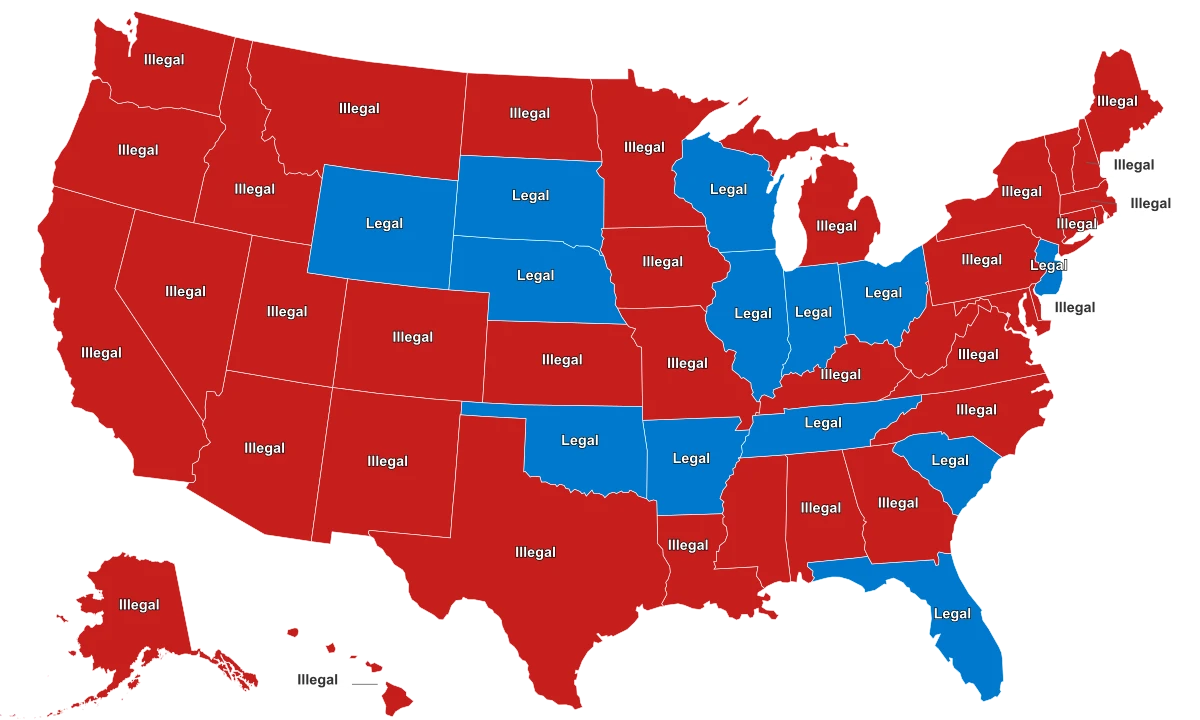
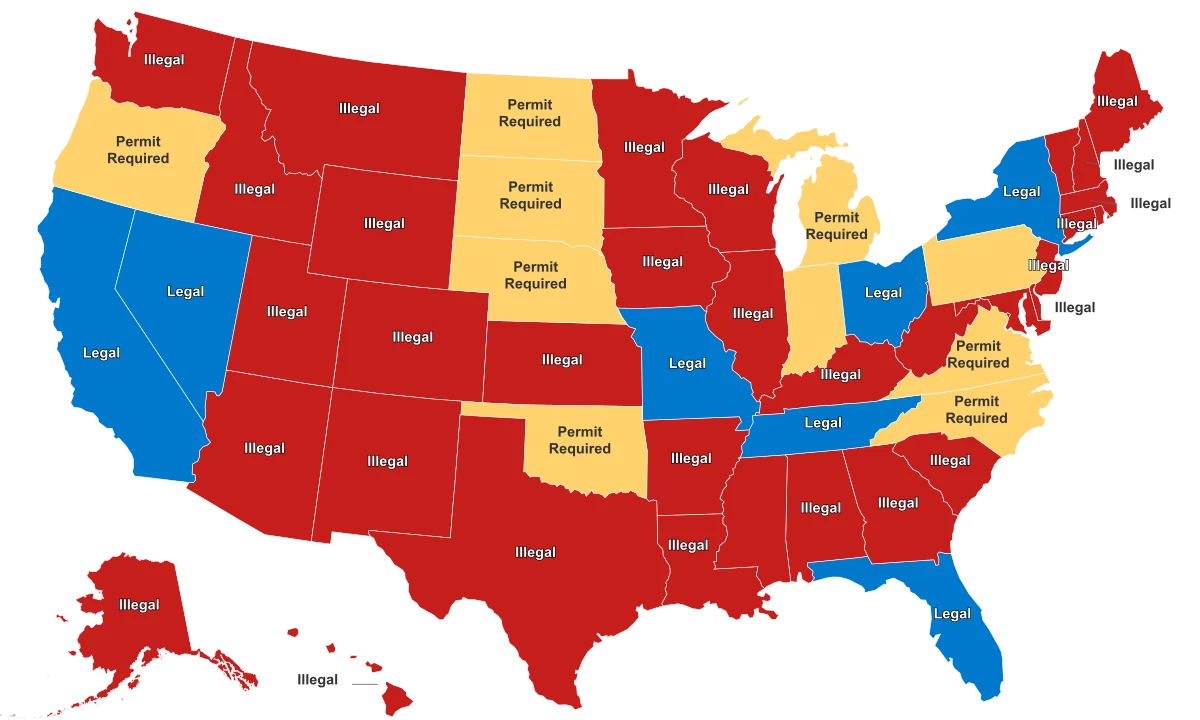
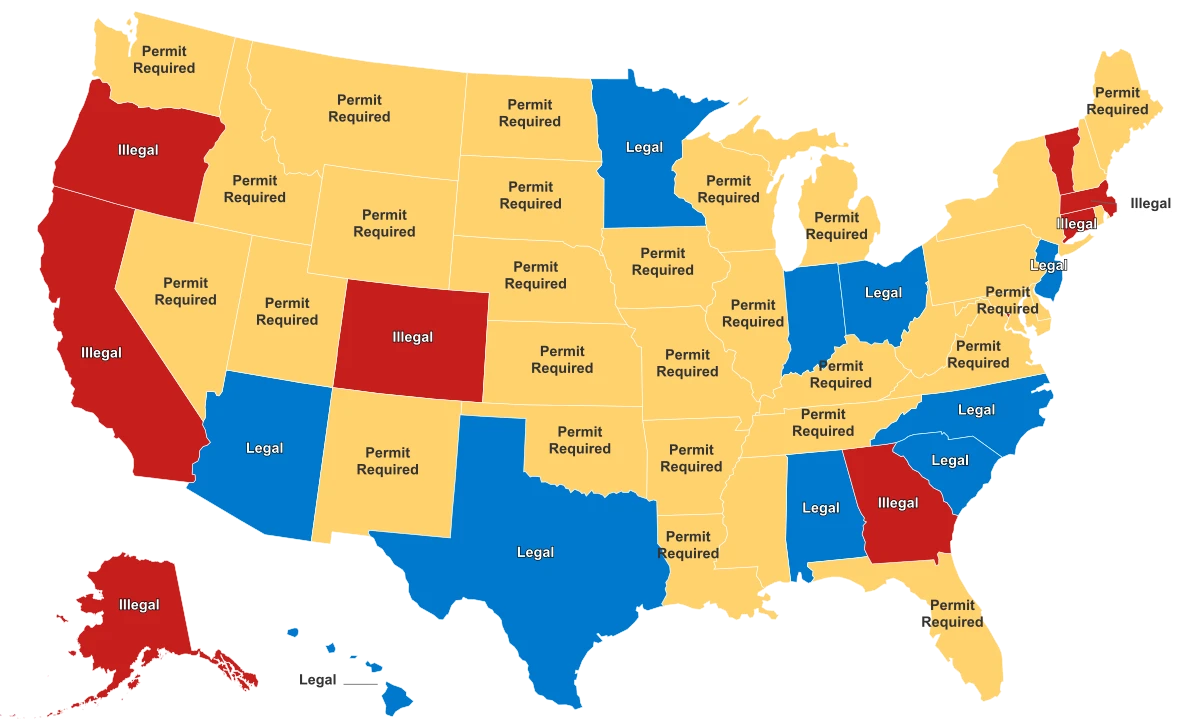
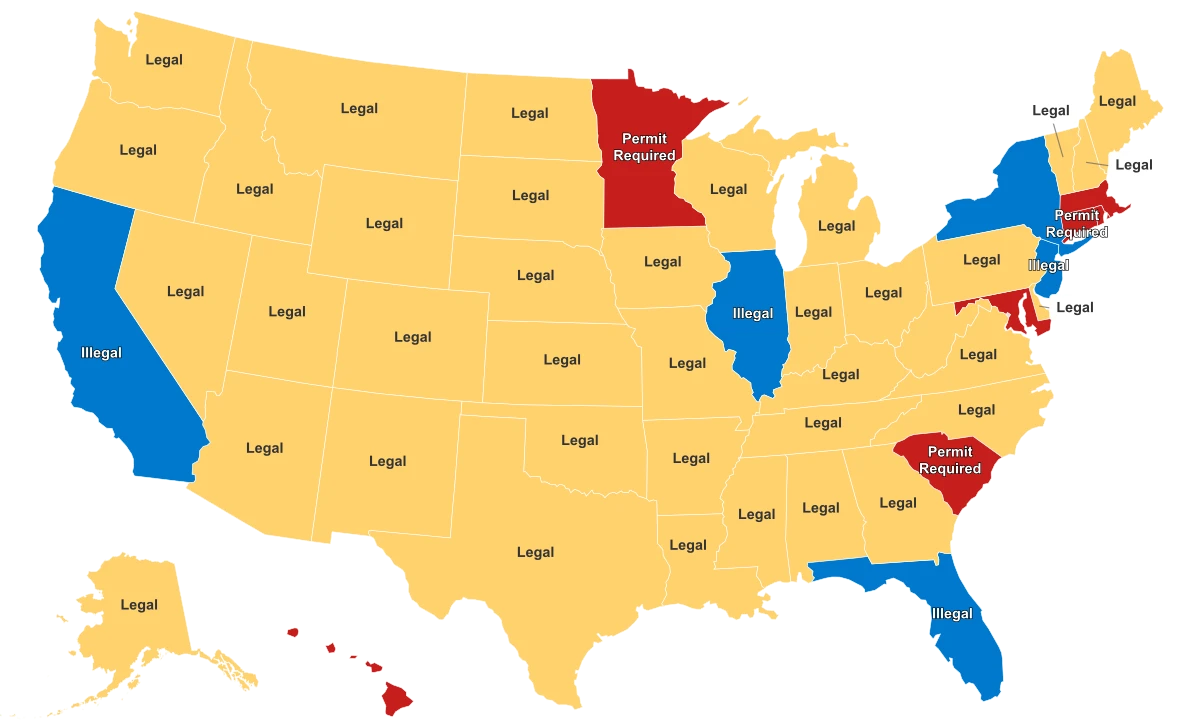
Tennessee is one of the most permissive states for exotic pets in the country. Monkeys are legal. Pet raccoons are legal. Pet otters are legal. But pet foxes are illegal. Oklahoma follows a similar pattern: monkeys and raccoons are legal, but foxes require a permit and otters require one too.
The logic works in reverse as well. New York bans monkeys outright but allows pet otters. Florida bans monkeys while allowing both raccoons and otters. Nevada allows monkeys with no restrictions but bans raccoons and foxes.
| State | Monkeys | Foxes | Raccoons | Otters |
|---|---|---|---|---|
| Tennessee | Legal | Illegal | Legal | Legal |
| Oklahoma | Legal | Permit Required | Legal | Permit Required |
| Nevada | Legal | Illegal | Illegal | Legal |
| New York | Illegal | Illegal | Illegal | Legal |
| Florida | Illegal | Illegal | Legal | Legal |
| Ohio | Permit Required | Illegal | Legal | Legal |
These inconsistencies exist because each animal is regulated under different statutes, often written decades apart in response to different incidents. Raccoon bans are typically driven by the CDC's rabies vector species classification. Fox bans often stem from agricultural protection laws. Monkey bans are rooted in zoonotic disease and public safety liability. Otter regulations are relatively new and vary the most across states, in part because otter ownership was not widespread enough to trigger legislative attention until recently.
The result is a regulatory landscape where no single state applies a consistent philosophy to all exotic animals. A state that treats one species as a personal liberty issue may treat another as a public health emergency, and vice versa.