

Key Takeaways
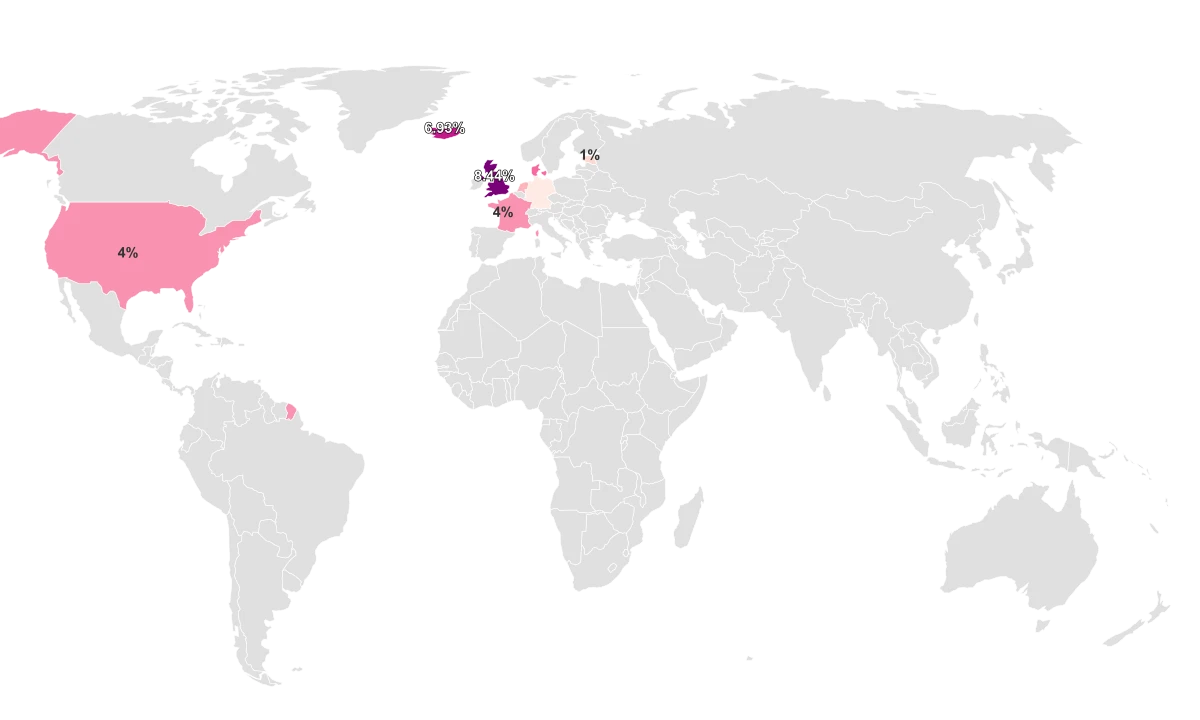
- Among the countries with sourced 2019 figures, the United Kingdom leads, with an estimated 8.4% of the population having natural red hair.
- Germany sits at the bottom of that same list at about 0.2%, more than fortyfold below the UK.
- These percentages are estimates compiled from genetics research, not a head count: they come from a peer-reviewed pigmentation review, not a census.
- Red hair is a recessive trait of the MC1R gene, which is why it pools in the British Isles and the North-Atlantic fringe and thins out moving south across Europe.
Red Hair Clusters at Europe's Northwestern Edge
The short answer to "which country has the most redheads" depends on whose population you are counting, and on accepting that nobody runs a global redhead census. Among the eight countries with sourced figures here, the United Kingdom leads at an estimated 8.4%, while Germany trails at roughly 0.2%. Everything in between is a steady downward slope, not a scatter of unrelated numbers.
The figures carry a data year of 2019 and trace to a peer-reviewed source: a literature review of eye and hair pigmentation published in Forensic Science International: Genetics. That matters for how you read them. The review compiled prevalence estimates from many earlier studies rather than measuring a standardized sample in each country, and its authors flagged how little data exists outside Europe. A higher percentage means red hair is simply more common in that population, and these are best-available estimates rather than exact counts.
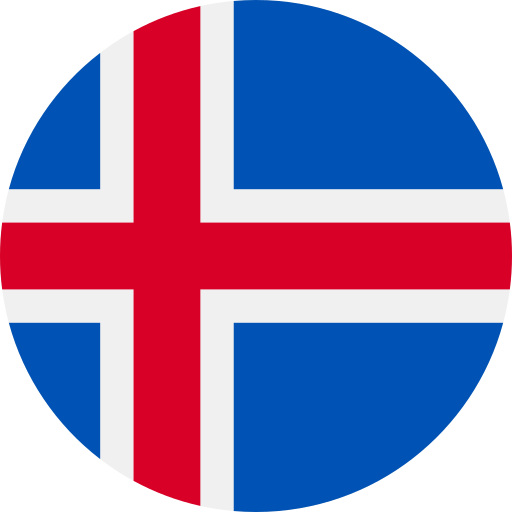
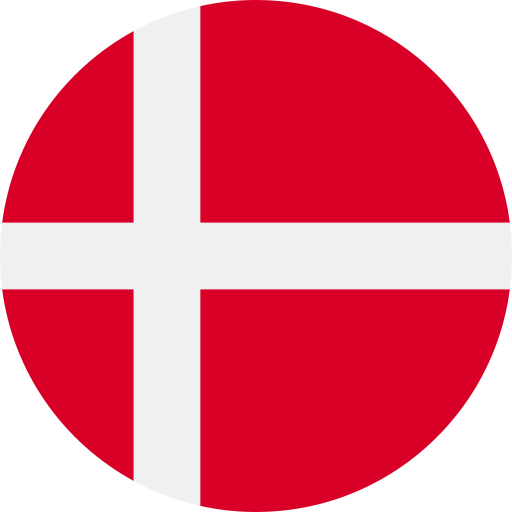
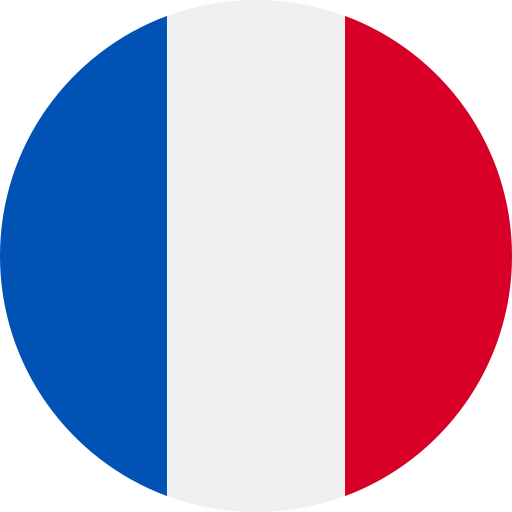
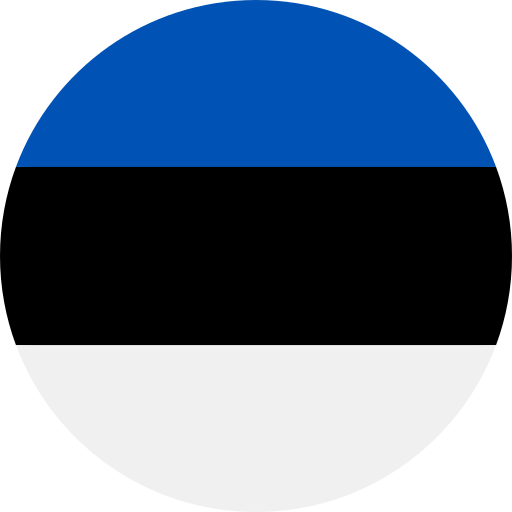
Read as a map, the pattern is a slope rather than a scatter. Iceland (6.9%) and Denmark (5.0%) follow the UK near the top, France and the United States land around 4%, and the share thins through the Netherlands at 2.6% before bottoming out in Estonia and Germany. No single country breaks freakishly from the rest. Instead, red hair is densest at Europe's northwestern edge and grows rarer with almost every step away from it, which is the first clue to what is really driving the ranking.
Why Red Hair Pools at the Celtic Fringe
The reason the top of this list reads like a tour of the North Atlantic comes down to a single gene. Red hair is a recessive trait of MC1R, the melanocortin-1 receptor, and it is found in 2 to 6% of people of Northwestern European ancestry, typically those of Celtic descent. A child needs an altered copy from both parents to be a redhead, which is why the trait concentrates in populations where the variant is common and stays rare everywhere else.
That geography is not random. When MC1R is mutated, it produces a reddish pigment called pheomelanin instead of the dark eumelanin most people make, and it also lightens the skin. According to the AIM at Melanoma Foundation, the variant "was genetically tolerated among Northwestern European populations" because the low-sunlight North did not punish lighter skin, while "the opposite could occur closer to the equator." That is the engine behind the slope in the data: the trait pools where it was tolerated and thins toward the south, which is why Germany sits more than 40 times below the UK.
The pattern holds up under closer study. A genetics analysis of Scottish and Danish populations confirmed that MC1R variation tracks the red dimension of hair color in Scots, and that the gene "regulates the colour rather than the intensity of pigmentation." In other words, the country rankings here are really a readout of how common one recessive variant is, drawn in percentages instead of in DNA.
Ireland Is Famous for Red Hair, but It Is Missing From the Hard Numbers
Ask most people which country is reddest and they will say Ireland. The dataset complicates that. Ireland does not appear in the sourced 2019 figures at all. It surfaces only in a second, undated and unattributed batch of numbers, where it carries the single highest estimate anywhere on the page, around 10%. The popular answer and the hard data are not living in the same column.
The 10% figure is not invented, which is why it is worth naming rather than ignoring. The AIM at Melanoma Foundation independently puts red hair at approximately 10% of Irish people, so Ireland's reputation has real support. The honest caveat is that within this dataset that number is unsourced and undated, so it should be read as a corroborated estimate, not as a verified 2019 measurement on the same footing as the UK's 8.4%.
The same gap applies to Scotland, the place most often called the redhead capital of the world. By per-capita reputation it sits around 13%, higher than anything in the sourced figures, yet Scotland is not broken out in this country-level data at all. The takeaway is not that the rankings are wrong, but that they are partial: a handful of well-studied countries, expressed as careful estimates, that capture the shape of where red hair lives without claiming to be the final word on it.