























































































The Global Jewish Community
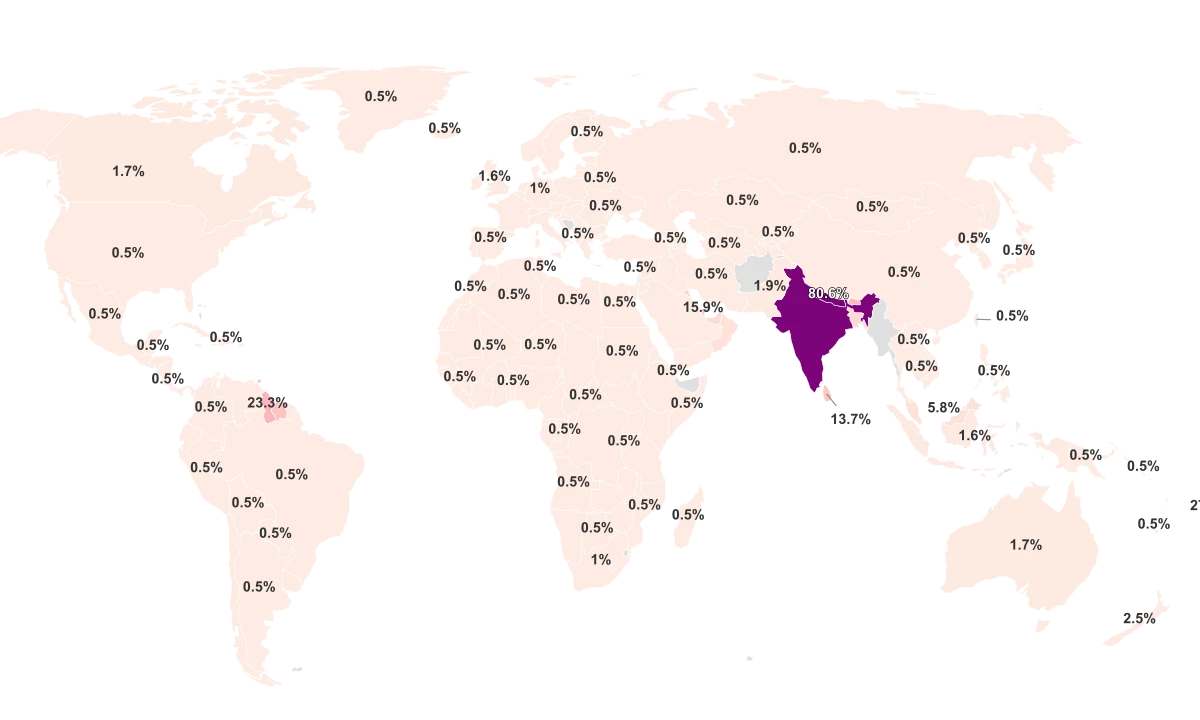
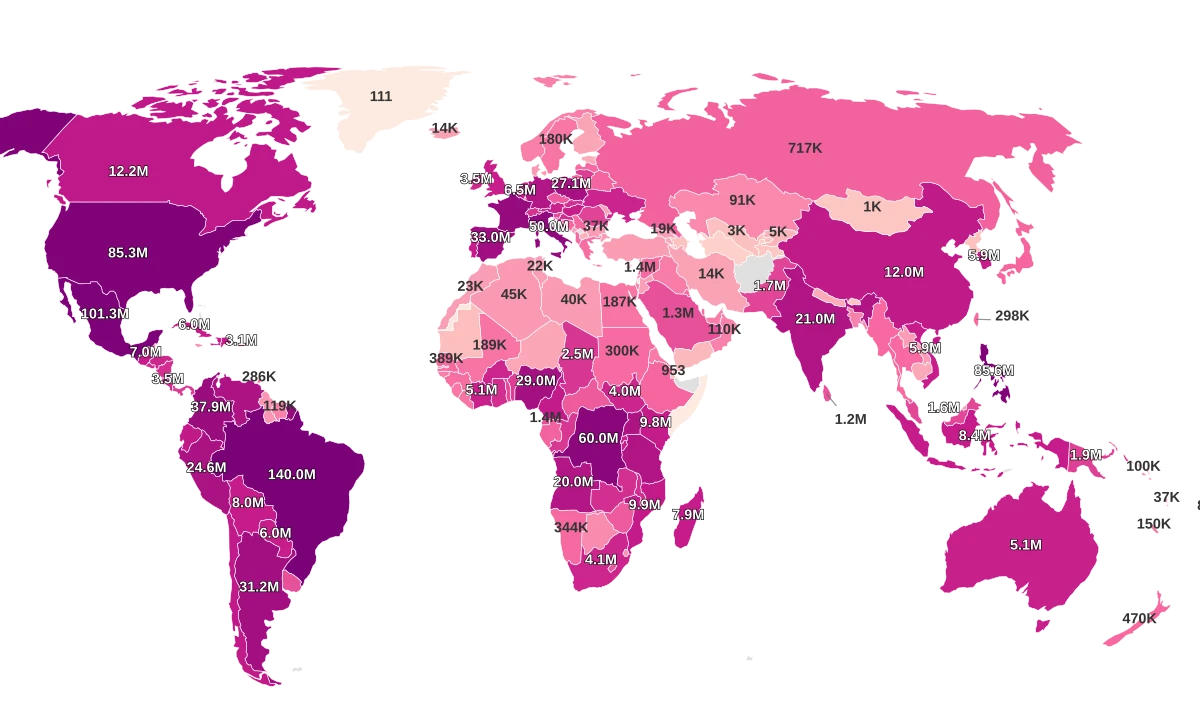
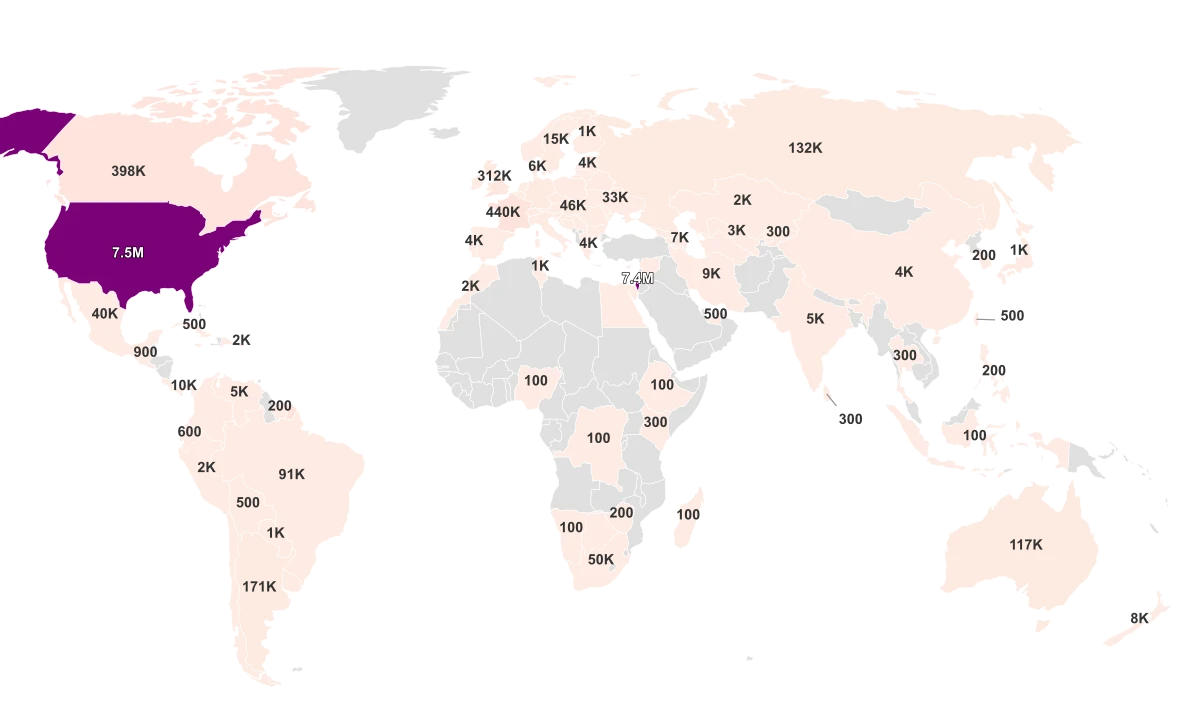
Judaism, one of the world's oldest monotheistic religions, has a rich historical and cultural legacy that spans thousands of years. It is deeply embedded in a multitude of societies worldwide. As of 2022, the global Jewish population is approximately 15 million, spread unevenly across different countries and continents, creating a fascinating mosaic of Jewish communities with varying sizes, practices, and cultures. The United States and Israel have the largest Jewish populations worldwide, with approximately 6.9 million and 6 million respectively. These two countries alone account for about 86% of the total global Jewish population. Europe, predominantly France, the United Kingdom, and Germany, also hosts a significant portion of the Jewish community. However, it's beyond these largest communities where the complexity and cultural diversity of the global Jewish community begin to emerge. Small but vibrant Jewish populations are found in places as disparate as Argentina, Australia and Russia, while smaller communities of approximately 500 individuals are found in countries such as Indonesia, Kenya, and El Salvador. Key findings from the data include:
- Israel has the largest population of Jewish individuals worldwide with approximately 6.9 million people.
- The United States comes close with around 6 million Jewish individuals, making it the country with the second-highest number of Jewish residents.
- In Europe, France hosts the largest Jewish community with around 446,000 individuals, followed closely by the United Kingdom, and Germany, with 292,000 and 118,000 people respectively.
- Argentina accounts for the most substantial Jewish community in Latin America with around 175,000 individuals.
- The smallest Jewish populations are recorded in a variety of countries, including Armenia, Namibia, and the United Arab Emirates, with each harboring only about 500 Jewish individuals. Understanding the geographical distribution of Jewish populations provides invaluable insights into the global Jewish community's diversity, resilience, and adaptive capacity amidst continually changing societal landscapes.